1
Rodent-Contaminated Attic Insulation
Serious Rats and mice tunnel through attic insulation and nest in it, leaving droppings and urine behind. Soiled insulation loses much of its R-value, gives off odors and can carry pathogens. It also keeps attracting more rodents until it's removed and the entry points are sealed.
Why it happens here The Puente Hills, Whittier Narrows and older neighborhoods full of fruit trees support large roof rat populations. Post-war homes in South Whittier, Pico Rivera and Montebello often have loose roof-eave screens, gaps at the gable vents and unsealed plumbing penetrations. Their soft, decades-old rock wool makes ideal nesting material. In hot summers, rodents also move into shaded attics looking for shelter. In older homes, we see this problem more than anything else.
Signs to watch for - Scratching or scurrying overhead at night
- Musty or ammonia-like odor from ceiling vents or the hallway hatch
- Droppings visible around the attic access
- Tunnels or flattened trails through insulation
- Chewed wiring or duct wrap
- Fruit-tree or ivy branches touching the roofline
Local patterns Rodent contamination is especially common in hillside-adjacent homes near the Puente Hills and Friendly Hills, in older Uptown Whittier properties with mature citrus trees, and in 1950s tracts in Pico Rivera and South Whittier. Calls peak in late summer and fall.
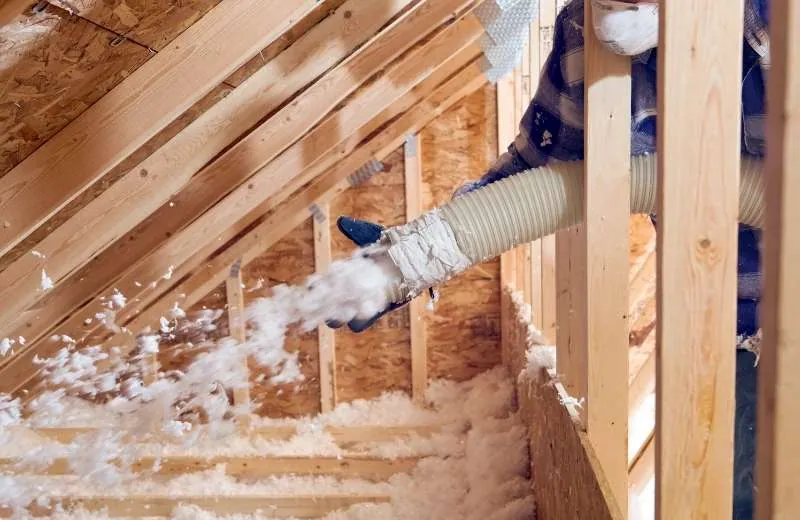
Our fix We vacuum out all contaminated insulation, sanitize and deodorize the attic, seal rodent entry points, then install fresh blown-in insulation to R-38.
2
Thin, Compressed Post-War Attic Insulation
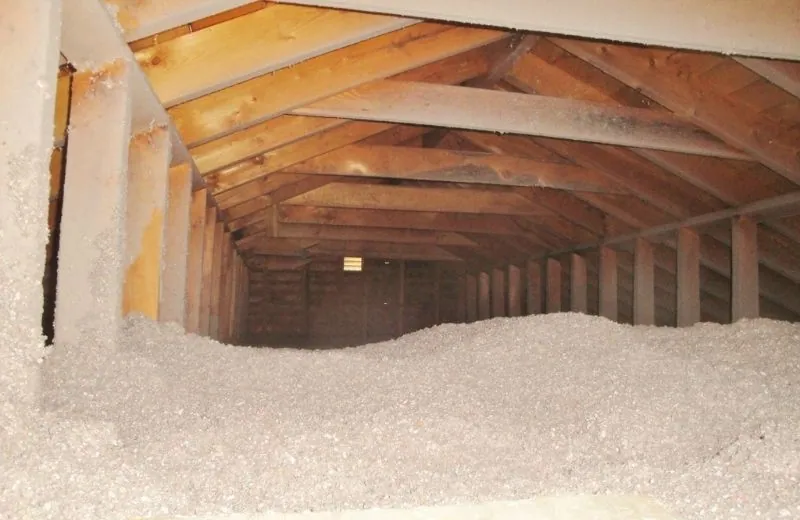
Moderate This is the original 1–3 inches of rock wool or early fiberglass that has settled and matted down over 60 or more years. It delivers maybe R-5 to R-9 today, far below the roughly R-38 that Title 24 targets for Zone 9 ceilings.
Why it happens here Most homes in Downey, Norwalk, La Mirada and Santa Fe Springs were built between 1945 and 1965, when builders installed very little insulation. Decades of 140°F summer attic temperatures, foot traffic from HVAC and electrical crews, and dust settling on top have compressed it further. Because these low-slope ranch attics are hard to get into, most owners have never looked, so the original material is often still there.
Signs to watch for - Ceiling joists visible above the insulation
- Ceilings warm to the touch on summer afternoons
- AC runs nonstop through the 4–9 pm peak
- Summer SCE bills well above what similar neighbors pay
- Gray, dusty or patchy insulation
- Bare spots near the hatch or furnace platform
Local patterns This shows up in single-story stucco ranches across Downey, Norwalk, La Mirada, Santa Fe Springs, Bell Gardens and South Whittier, especially homes that have had a newer AC system installed without anyone touching the attic insulation.
Our fix We air-seal the top plates and penetrations, then blow loose-fill fiberglass or cellulose to R-38. Badly soiled material comes out first.
3
Uninsulated or Leaky Ducts in a Hot Attic
Serious Supply ducts running through a superheated attic with no insulation, a thin R-4 wrap or leaking joints. Cool air picks up heat before it ever reaches a vent, and leaks dump conditioned air straight into the attic.
Why it happens here In most Whittier-area homes, the furnace and duct runs sit in the attic. When the attic hits 140°F, an R-4 duct is running in an oven. Older flex duct breaks down, and tape joints dry out in the heat. Cerritos and Hacienda Heights two-stories with long duct runs to upstairs bedrooms take the biggest hit.
Signs to watch for - Weak airflow at the far rooms
- Upstairs bedrooms 5–10°F warmer than downstairs
- Dust streaks around supply registers
- Crushed, torn or disconnected flex duct
- Duct jacket falling apart or brittle
- Dusty air even after changing filters
Local patterns Leaky ducts are most common in 1960s–1980s two-story homes in Cerritos, Hacienda Heights, Rowland Heights and La Habra. Post-war ranches whose ducts were replaced without sealing or HERS verification have the same problem.
Our fix We insulate the attic floor to code and coordinate duct sealing and R-6 or better duct insulation. When ducts are altered, Title 24 requires HERS verification.
4
Air Leaks Letting In Smoke, Dust and Heat
Moderate Unsealed gaps at recessed can lights, wall top plates, plumbing and wiring holes, and attic hatches. Insulation slows heat moving through a ceiling, but it doesn't stop air from passing through. Gaps like these let attic air, dust and smoke into living spaces.
Why it happens here When Santa Ana winds blow and wildfire smoke drifts in from the Puente Hills or the San Gabriel Mountains, every unsealed ceiling gap becomes a path into the house. Older homes have dozens of these openings left by decades of rewiring and can-light retrofits. Inland basin smog makes indoor air quality worse.
Signs to watch for - Dust lines on carpet edges or around can lights
- Smoky smell indoors during fire season
- Drafts around the attic hatch
- Black smudges on the insulation above light fixtures
- Rooms that heat up quickly on windy days
Local patterns Air leaks are especially noticeable in Friendly Hills and Hacienda Heights homes closest to the hills, and in Whittwood/East Whittier ranches with many can-light retrofits. Complaints spike during September–November Santa Ana events.
Our fix Before insulating, we seal top plates, penetrations and the hatch with foam and caulk. That way new insulation performs at its rated value and blocks outside air.
5
Hazardous Legacy Materials: Vermiculite, Asbestos and Knob-and-Tube
Emergency Some pre-1980 homes contain vermiculite attic fill, asbestos duct wrap or popcorn ceilings, and some still have live knob-and-tube wiring. None of these should be disturbed or covered with blown insulation until they've been tested or evaluated.
Why it happens here Uptown Whittier's Craftsman and Victorian homes and the older East LA and Montebello housing stock date from the decades when these materials were standard. Disturbing asbestos is regulated under South Coast AQMD Rule 1403. Burying active knob-and-tube wiring under insulation creates a fire risk.
Signs to watch for - Gray-brown, pebble-like granules in the attic
- White, papery wrap on older ducts
- Ceramic knobs and tubes along the joists
- Popcorn ceiling texture original to the home
- No record of past testing
Local patterns Look for this in homes near Whittier College and in Hadley-Greenleaf, College Hills and older East Los Angeles and Montebello homes built before 1940. It's also found in some post-war homes with vermiculite top-ups.
Our fix We stop work and arrange testing. Any abatement goes to properly registered contractors, and wiring goes to an electrician for evaluation. Insulation work starts only after the space is cleared.
6
Cold Floors Over Uninsulated Crawlspaces
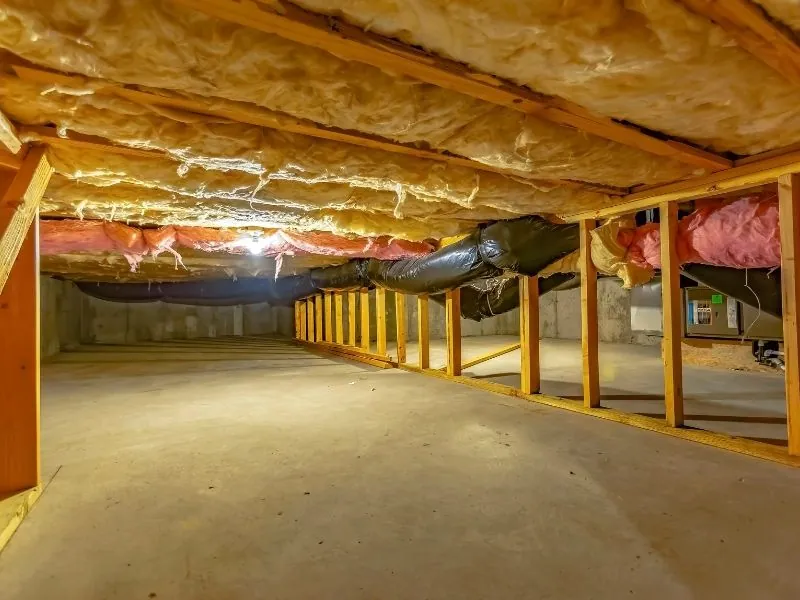
Minor Raised-foundation homes with no insulation between the floor joists. Cool crawlspace air chills the floors in winter, and damp, open crawlspaces can invite pests and musty odors.
Why it happens here Craftsman bungalows and some post-war homes in Whittier, Montebello and East LA were built on raised foundations. Few of them were ever insulated underneath. Winter lows in the 40s aren't extreme, but they're enough to make hardwood floors uncomfortable. Seismic retrofit work, a common upgrade here since the 1987 Whittier Narrows quake, is a good time to insulate.
Signs to watch for - Cold floors on winter mornings
- Drafts at baseboards
- Musty smell from floor registers
- Sagging or missing batts below
- Rodent activity under the house
Local patterns Most common in Uptown Whittier, around Whittier College, and in older Montebello and East Los Angeles neighborhoods with pier-and-post or cripple-wall foundations.
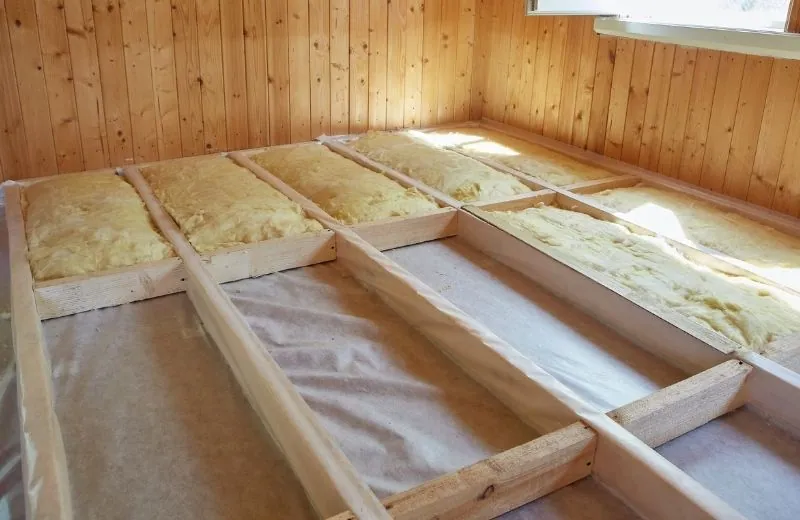
Our fix We install R-19 or higher batts between the floor joists, secured with supports, and seal the larger gaps to the house. Damaged or fallen material is cleared out first.
7
Empty Plaster Walls and Freeway Noise
Minor Exterior walls with nothing inside the cavities, a common condition in pre-1950 homes. These walls let heat and street noise pass straight through.
Why it happens here Lath-and-plaster homes in Uptown Whittier were built before wall insulation was standard. Homes near the I-5, I-605, the 60 and the 105, or along the Union Pacific and BNSF lines and the industrial areas in Commerce and Santa Fe Springs, also deal with constant noise.
Signs to watch for - Exterior walls feel warm on summer afternoons
- Freeway or train noise clearly audible indoors
- Rooms on the west side overheat
- Infrared or outlet checks show empty cavities
Local patterns Most common in Uptown Whittier Craftsmans, Bell Gardens and Commerce homes near rail lines, and Norwalk and Downey homes backing onto the 605 or the 5.
Our fix We use drill-and-fill dense-pack insulation through small, carefully placed holes, then patch them. This keeps original plaster intact while improving comfort and reducing noise.